LT. ROlla L GARRETSON
A2 Jacket
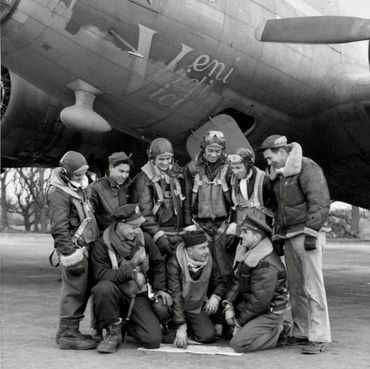
The crew of Veni Vidi Vici and their aircraft arrived in England in September 1943, joining the 562nd Bomb Squadron, 388th Bomb Group, at Knettishall. The navigator, Rolla Garretson, submitted the name Veni Vidi Vici—“I Came, I Saw, I Conquered”—believing Julius Caesar’s famous declaration of 47 BC was fitting for a bomber destined to strike at the heart of Nazi Germany.
The pilot, 1st Lt. Herbert W. Moore of Edgewood, Pennsylvania, and his crew completed their tour of 25 missions on 20 February 1944, including two successful sorties during the brutal “Black Week” of October 1943. Twenty of their missions were flown in Veni Vidi Vici itself. Remarkably, none of Moore’s crew were killed, wounded, or taken prisoner—a rare achievement at a time when only about 25 percent of Eighth Air Force bomber crews managed to complete a full mission tour. In every sense, the crew lived up to the name painted on their B-17.
After Moore’s crew finished their tour, 1st Lt. Montgomery Jr.’s crew took over the aircraft. While flying a mission to Poznań, Poland, Veni Vidi Vici suffered severe battle damage. Weighing their chances of survival, the crew diverted to neutral Sweden, where they made a safe landing and were interned for the remainder of the war. The Swedes subsequently acquired the aircraft, refurbished it, and converted it for civilian aviation service. Re-designated SE-BAK, the former American bomber eventually entered commercial use—its first civilian flight famously touching down in New York City at LaGuardia Airport.
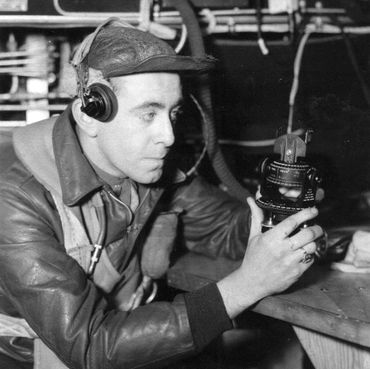
Showcased are some photos Lt. Garretson's crew, plane, and A-2 Jacket. Note that the jacket in the wartime photo below, is the same one as above; the leather & subdued Lt. rank match identically. Thank you for your service, Lt. Garretson.